|
The
VolatilityAnalyzer
 |
Everybody nowadays is talking about
market volatility. For most of the people, volatility is an enemy
that causes them to lose their money, but for experienced traders
volatility is a Money Making Machine. They know how to analyze and
predict future volatility behavior and also what option strategy to
use in each situation. That's why we created the VolatilityAnalyzer,
for it will give you the full capability to do "volatility
trading."
One of the key patterns in volatility
behavior is that volatility usually moves within a certain range,
specific for the particular underlying. To spot the situations when
volatility is reaching its highest or lowest levels and is ready to
reverse itself, is a key to success.
It is also very important to analyze
ratios between different types of volatilities, such as 5, 20, 50
and 100 day Statistical Volatilities. If you look through a number
of volatility charts, you will notice the so-called "Rubber
Band" effect, when the short-term volatility measure is rising
(falling) above (below) the longer-term one and than snaps back to
the level of the long-term one.
You may also have heard about
Overvalued / Undervalued options. Simply, what this means is that
the current option price is Greater / Lower than the Fair value of
this option. The Fair value is usually calculated using Black-Scholes
Pricing model. The main component of this model is Volatility. So
now we get to the most difficult question: Which volatility should
be used in a Fair value calculation? Some experts think it have to
be 100 Day Statistical volatility, some are using 20 Day Statistical
Volatility and some are saying that in fast moving markets even 10
or 5 Day Statistical Volatility should be used. In PowerAnalyzer we
are use 20 Day Statistical Volatility, but what if you do not agree
with us? Then the VolatilityAnalyzer is for you.
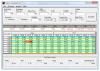
For all traders who want to use
Volatility Based Trading, we created these unique tools, where YOU
can set your own volatility ratios and where YOU can define which
volatility history chart you want to analyze.
Take our FREE VolatilityAnalyzer tour
and learn how YOU can take advantage of these tools.
To
take a Tour click here.
|