|
The
Daily Volume Alert Service - Track Record
 |
Profit
and Loss History:
UPDATED
THROUGH 12/31/03
Click
Here for the PDF version of this update.
The
following figures represent hypothetical
performance;
these positions were not actually traded in an account.
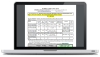
RESULTS
The ten-year track record of McMillan’s
Daily Volume Alerts continues to be stellar – a
profit of nearly $90,000 was made on a daily
average investment of slightly over $20,000 over
the ten year period. That's a non-annualized
return of over 458% on the average investment. |
The ten-year track record of McMillan's Daily Volume Alerts continues to be stellar a profit of over $90,000 was made on a daily average investment of slightly under $20,000 over the ten year period. That's a non-annualized return of over 458% on the average investment. The figures below encompass our entire track record since the end of February, 1994, (which was when we started selling the service). After a rough start, 2003 got back onto the positive side with a strong fourth quarter. Once again, there weren't many takeovers in 2003, but momentum trading generated most of the profits that showed up on the bottom line. Index option trading showed only a small gain for the year, as the choppy back-and-forth market from June through December made index position trading difficult.
The 10-year study was conducted by assuming that $5000 of each stock was bought for each recommendation, or 5 options if an option was specifically recommended. These results used the
specific buy and sell recommendations and stop-out points that were advised in our Daily Volume Alert service. In ten years, 1349 positions have been taken, which is roughly one new position every other trading day. This ratio has slowed substantially since the first couple of years. Positions are held for several days after being bought, so there was an average of 4.6 positions held on any one trading day.
Over the ten years, of the 1349 positions established, 563 were winners (after allowing for 8 cents commission each way), or 42%. This 42% figure has been amazingly constant throughout the years (in the year 2003, 40 of 99 trades or 40% were profitable). We spend a good deal of time trying to weed out false option volume signals not only those generated by non-speculative sources such as covered writes, arbitrage, and spreads, but also those that are just pure "hype". Even so, only about 2 of 5 turn out to be "true" insider situations. Still, that is usually enough to generate good profits when tight stops are used and profits are allowed to run via the use of a trailing moving average (usually the 20-day simple moving average).
The biggest individual winners and losers over the years were both OEX trades: an OEX bull spread made $9900 in 2001, while an OEX put purchase lost $4300 in 1998. In stock options, the biggest winner was $8100 in Network Appliance calls in 2000, and the biggest loser was $3000 in CSC in 1998. The largest drawdown the maximum amount that was lost from an accumulated peak profit was $23,357, and it occurred during 1998 after good profits early in the year turned to losses by mid-year, before profits recovered again in the fourth quarter.
 |
| Pricing
Information |
Monthly
(fax
or email)
$149 Autorenew

$199 Single Month
 |
Quarterly
$435, save $162 over monthly
 |
Annual
$1495, save $245 over quarterly
 |
Seven
Day Trial
Free
 |
|
Finalist
in the
"2003 Readers'
Choice Awards"
voted by readers of


|